
Would Your Family Be Ready? A Simple Family Emergency Plan
Emergency preparedness tends to be one of those things we know we should do but keep putting off. It doesn’t feel urgent until it is. And when a hurricane is bearing down on Galveston County or a severe weather warning appears at 2 AM, that is not the moment to be figuring out your plan.
Families with young children need an emergency plan that accounts for the specific realities of caring for small people who can’t pack their own bag, can’t call an out-of-state contact, and who need honest, age-appropriate information to feel safe when scary things happen.
Here’s how to build one — simply, practically, and without panic.
Why Families with Young Children Need a Specific Plan
Generic emergency preparedness advice (“have a go bag, know your evacuation route”) doesn’t fully account for what families with babies, toddlers, and preschoolers actually face:
- Children are more vulnerable to heat, cold, dehydration, and illness during displacement
- Young children can’t care for themselves in any emergency scenario
- The psychological impact of emergencies on young children can be significant without the right adult response
- Car seat installation, formula, diapers, medications, and comfort items require specific planning
- Children often regress behaviorally during and after emergencies, which parents need to anticipate
A few hours of planning now is the most important thing you can do for your family’s safety before any emergency occurs.
Key Components of a Family Emergency Plan
Designate Two Meeting Places
- Near home: A specific spot at the end of your driveway, a neighbor’s yard, or a block away — somewhere everyone can get to on foot if you need to leave your home quickly
- Away from the neighborhood: A school, community center, or relative’s home several miles away in case your neighborhood is inaccessible
Make sure every family member — including your preschooler — knows both spots. Practice going to them.
Designate an Out-of-State Contact
During a large local disaster, local phone lines can be overloaded, but long-distance calls often go through. Choose a relative or trusted friend in another state who will be the family’s communication hub. Everyone who gets separated calls that person; that person tracks who has been heard from.
Write this number down on an index card and put one in every go bag and in each child’s backpack. Teach older preschoolers the number if possible.
Build Go Bags for Your Family
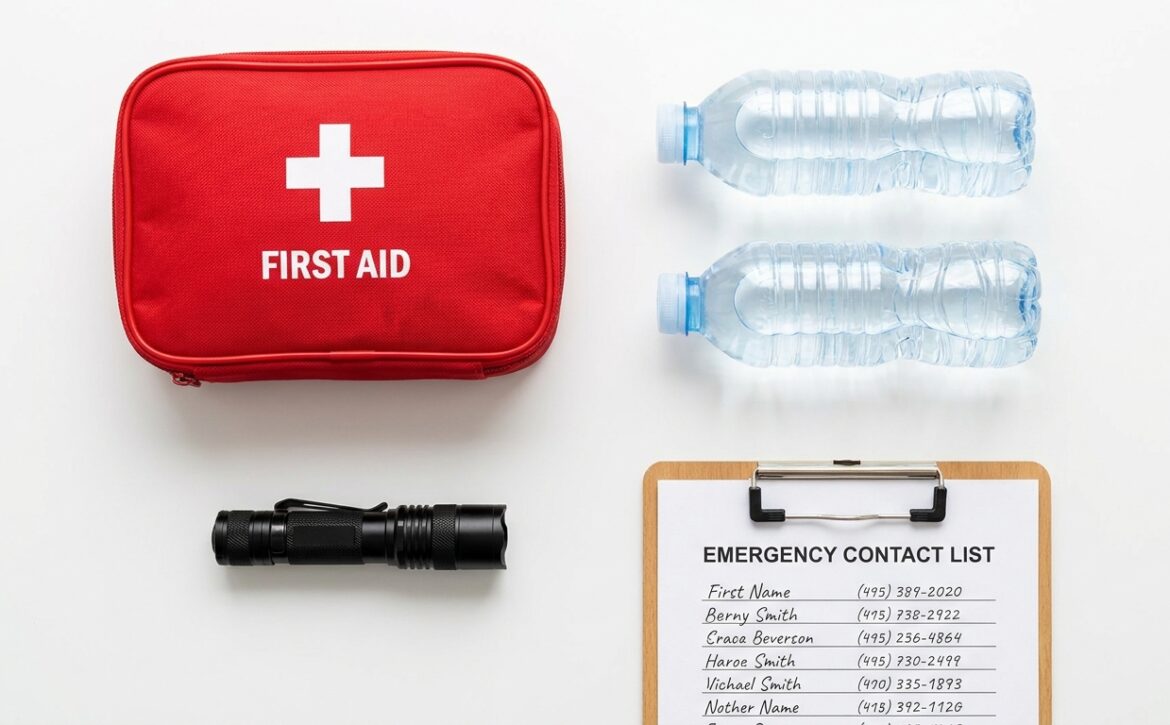
A go bag is a packed bag you can grab in minutes if you need to leave quickly. For a family with young children, it should include:
For every family member:
- 3-day supply of water (1 gallon per person per day — this is heavy; keep water purification tablets as backup)
- 3-day supply of non-perishable food your child will actually eat
- First aid kit
- Flashlight and extra batteries
- Copies of important documents (birth certificates, insurance cards, IDs, prescription information) in a waterproof bag
- Cash in small bills
- Phone charger and backup battery
For children specifically:
- Formula or breast milk supplies if applicable (and a way to warm)
- Diapers, wipes, and changes of clothing in correct sizes
- Car seat (it should already be in the car)
- Child-sized face masks (N95 for wildfire smoke)
- A comfort item — a stuffed animal, a small blanket — matters for young children in displacement. Don’t pack away the one they need to sleep.
- A small bag of familiar activities: crayons, a coloring book, a puzzle — familiar play during displacement dramatically reduces children’s distress
- Any prescription medications and an extra supply if possible
- A current photo of your child (in case of separation)
Know Your Evacuation Route(s)
For Galveston County families, hurricane evacuation is a real possibility. Know your evacuation zone (look it up at galvestoncountytx.gov) and your route before you need it. Have two routes planned — one north, one northwest — in case one is congested.
Do not wait until a mandatory evacuation order to leave if your family has young children, medical needs, or limited mobility. Leave earlier. Traffic during mass evacuations is extreme.
How to Talk to Young Children About Emergencies Without Causing Fear
This is where many parents hesitate: “I don’t want to scare them.” The truth is, a child who has no information about emergencies and suddenly finds themselves in one — in the dark, being rushed out of their home, seeing frightened adults — is far more scared than a child who has been gently prepared.
Frame It as Being Ready, Not Being Afraid
The language that works for preschoolers:
- “We have a plan for if something happens. That means our family knows what to do.”
- “We have a bag with things we might need if we have to go somewhere quickly.”
- “If there’s ever a really big storm, we know where we’ll go.”
Compare it to something familiar: “Just like we practice fire drills at school so everyone knows what to do, our family has a plan too.”
Keep It Simple and Age-Appropriate
Preschoolers need to know:
- Where the family meets if something happens
- That their grown-ups are the ones who keep them safe
- That it’s okay to feel scared and that you’ll be together
They do not need to understand the full scope of any disaster scenario. Details come with age. What they need is a sense of competence (“we have a plan”) and safety (“you will be with the people who love you”).
Practice Without Drama
Walk to your meeting spot one afternoon. Show your child the go bag. Let them put their comfort toy in it. Make it matter-of-fact, even a little fun — “this is our adventure bag!” Familiarity reduces fear in an actual emergency.
Texas-Specific Hazards to Plan For
- Hurricanes: The Gulf Coast is at real risk. Galveston County has experienced multiple major hurricanes and will again. Know your zone. Have a plan. Leave early.
- Severe weather (tornadoes and severe thunderstorms): Identify the safest interior room in your home (lowest floor, no windows). Keep shoes near beds — after a tornado, walking through debris is a major injury source.
- Extended power outages: During the February 2021 winter storm, Texas families experienced days without power in freezing temperatures. Keep extra blankets, a battery-powered radio, and a plan for staying warm or evacuating to a warming center.
- Flooding: Turn around, don’t drown — it applies to more than roads. Know your neighborhood’s flood risk. Never drive through flooded roads with children in the car.
How BKP Is Prepared
At Brainy Kids Place, we take emergency preparedness seriously. We have documented emergency protocols for fire, severe weather, lockdown, and evacuation. We conduct drills with children regularly — and we do it in a way that’s matter-of-fact and calm, so children have the experience of knowing what to do without being frightened.
We communicate our emergency protocols to families during enrollment and keep you informed if a drill or event occurs during the day. If you ever want to review our procedures or ask questions about how we handle a specific scenario, please ask — transparency about safety is something we take pride in.
We also encourage you to make a family plan now, before you need it. It takes a few hours and you’ll be glad you did.
Learn more about BKP’s safety practices and emergency protocols. Schedule a tour and ask our team about how we keep children safe every day — and what we’re prepared for.